
ByDisk2vhd
Machine Learning: A Complete Guide to Concepts, Types, Benefits, Applications, and Future Trends
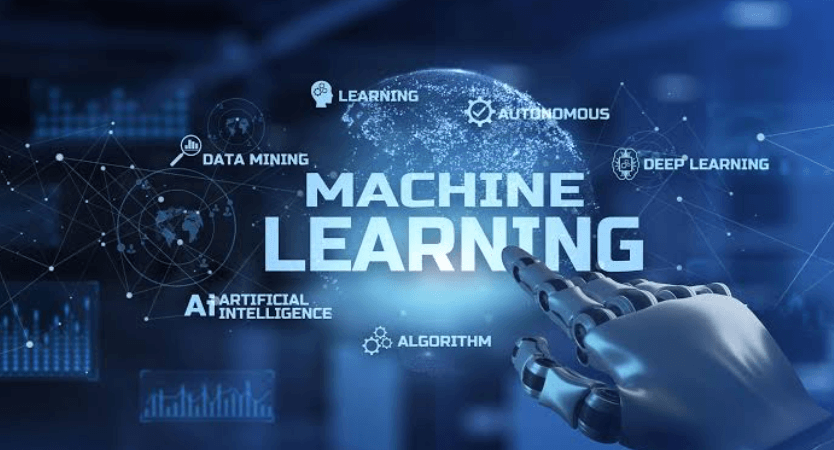
Machine Learning (ML) is one of the most important branches of Artificial Intelligence (AI), enabling computers to learn from data and improve their performance without being explicitly programmed for every task. From recommendation systems and fraud detection to self-driving cars and virtual assistants, machine learning powers many of the technologies people use every day.
As organizations continue to generate massive amounts of data, Machine Learning has become an essential technology for businesses, researchers, developers, and educators. This guide explains what Machine Learning is, how it works, its types, benefits, applications, challenges, and future trends.
What Is Machine Learning?
Definition of Machine Learning
Machine Learning is a subset of Artificial Intelligence that allows computer systems to learn from data, recognize patterns, and make predictions or decisions with minimal human intervention. Instead of following fixed programming rules, machine learning models improve their accuracy by analyzing examples and learning from experience.
Machine Learning is widely used in industries such as healthcare, finance, retail, manufacturing, transportation, education, and cybersecurity.
How Does Machine Learning Work?
Data Collection
The first step in machine learning is gathering relevant data from sources such as databases, websites, sensors, applications, and business systems.
Data Preparation
Collected data is cleaned, organized, and transformed into a format suitable for training machine learning models. This process includes handling missing values, removing duplicates, and selecting useful features.
Model Training
The machine learning algorithm analyzes the prepared data to identify patterns and relationships. During training, the model learns how to make predictions based on the provided examples.
Model Evaluation
After training, the model is tested using new data to measure its accuracy, precision, and overall performance.
Prediction and Improvement
Once deployed, the model makes predictions or decisions on new data and continues to improve through additional training and feedback.
Types of Machine Learning
Supervised Learning
Supervised learning uses labeled data where both the input and expected output are known. The model learns by comparing its predictions with the correct answers.
Common applications include:
- Email spam detection
- House price prediction
- Medical diagnosis
- Customer churn prediction
Unsupervised Learning
Unsupervised learning works with unlabeled data. The algorithm discovers hidden patterns, relationships, or groups without predefined answers.
Common applications include:
- Customer segmentation
- Market basket analysis
- Recommendation systems
- Data clustering
Reinforcement Learning
Reinforcement learning trains an AI agent by rewarding desired actions and penalizing incorrect ones. The system gradually learns the best strategy through trial and error.
Common applications include:
- Robotics
- Self-driving vehicles
- Video games
- Autonomous systems
Semi-Supervised Learning
Semi-supervised learning combines small amounts of labeled data with large amounts of unlabeled data to improve learning efficiency and reduce labeling costs.
Common applications include:
- Image recognition
- Speech recognition
- Medical imaging
- Natural language processing
Key Features of Machine Learning
Pattern Recognition
Machine learning identifies patterns and relationships within large datasets that may not be obvious to humans.
Predictive Analytics
ML models forecast future outcomes based on historical data, helping organizations make informed decisions.
Automation
Machine learning automates repetitive tasks such as classification, recommendation, fraud detection, and quality control.
Continuous Learning
Many machine learning systems improve their performance over time by learning from new data and user interactions.
Benefits of Machine Learning
Better Decision-Making
Machine learning provides valuable insights by analyzing large volumes of data quickly and accurately.
Increased Efficiency
Organizations automate routine tasks, reducing manual effort and improving productivity.
Improved Accuracy
Well-trained machine learning models often produce highly accurate predictions and classifications.
Personalized Experiences
Businesses use machine learning to recommend products, personalize content, and improve customer experiences.
Cost Savings
Automation and predictive maintenance reduce operational costs and improve resource utilization.
Applications of Machine Learning
Healthcare
Machine learning assists with disease prediction, medical imaging, personalized treatment recommendations, and drug discovery.
Finance
Banks use machine learning for fraud detection, credit scoring, algorithmic trading, and financial forecasting.
E-commerce
Online retailers use ML to recommend products, personalize shopping experiences, forecast demand, and optimize pricing.
Marketing
Machine learning helps businesses analyze customer behavior, optimize advertising campaigns, and improve audience targeting.
Cybersecurity
ML detects unusual network activity, identifies threats, and helps prevent cyberattacks.
Manufacturing
Manufacturers use machine learning for predictive maintenance, quality inspection, production optimization, and inventory management.
Transportation
Machine learning supports route optimization, traffic prediction, autonomous vehicles, and fleet management.
Education
Educational platforms use ML to personalize learning, assess student performance, and recommend study materials.
Popular Machine Learning Algorithms
Several algorithms are widely used in machine learning projects, including:
- Linear Regression
- Logistic Regression
- Decision Trees
- Random Forest
- Support Vector Machines (SVM)
- K-Nearest Neighbors (KNN)
- Naive Bayes
- K-Means Clustering
- Gradient Boosting
- Neural Networks
The choice of algorithm depends on the type of data, problem, and desired outcome.
Challenges of Machine Learning
Data Quality
Machine learning models require clean, accurate, and relevant data to perform effectively.
Large Data Requirements
Many ML models need substantial amounts of training data to achieve high accuracy.
Bias and Fairness
Biased training data can lead to unfair or inaccurate predictions, making responsible data collection essential.
Model Interpretability
Some advanced machine learning models can be difficult to explain, especially deep learning systems.
Privacy and Security
Organizations must protect sensitive data and comply with privacy regulations when using machine learning.
Best Practices for Machine Learning
Use High-Quality Data
Clean and well-structured datasets significantly improve model performance.
Select the Right Algorithm
Choose algorithms based on the specific problem, available data, and business objectives.
Monitor Model Performance
Regularly evaluate models to ensure they remain accurate as new data becomes available.
Prevent Overfitting
Use validation techniques and diverse datasets to ensure models perform well on unseen data.
Frequently Asked Questions
What is Machine Learning?
Machine Learning is a branch of Artificial Intelligence that enables computers to learn from data and improve their performance without explicit programming for every task.
What are the main types of Machine Learning?
The four primary types are supervised learning, unsupervised learning, reinforcement learning, and semi-supervised learning.
Is Machine Learning the same as Artificial Intelligence?
No. Machine Learning is a subset of Artificial Intelligence. While AI is the broader field of creating intelligent systems, Machine Learning focuses specifically on learning from data.
What programming languages are commonly used for Machine Learning?
Python is the most popular language for Machine Learning, followed by R, Java, Julia, C++, and JavaScript for certain applications.
Which industries use Machine Learning?
Machine Learning is widely used in healthcare, finance, retail, education, manufacturing, transportation, cybersecurity, marketing, and many other industries.
Conclusion
Machine Learning is transforming industries by enabling computers to learn from data, automate complex tasks, and deliver accurate predictions. From personalized recommendations and fraud detection to medical diagnosis and autonomous vehicles, Machine Learning powers many of today’s most innovative technologies. As data continues to grow and AI advances, Machine Learning will remain a driving force behind digital transformation, helping organizations improve efficiency, make smarter decisions, and create intelligent solutions for the future.
